 Farmer John Pig Farm
What is a Factory Farm?
Anyone who's lived with animals knows that every one of them needs daily attention: food, clean water, space, and care when they're sick or injured. Before the advent of factory farming, these requirements meant that it took significant work to feed, shelter, and care for animals. It still takes significant work to care for animals. But mechanization has changed the work that it takes to feed and shelter animals. This has opened a new possibility for farms - to simply have so many animals that a given percentage of them dying makes little impact on the business.
The Logic of Scale
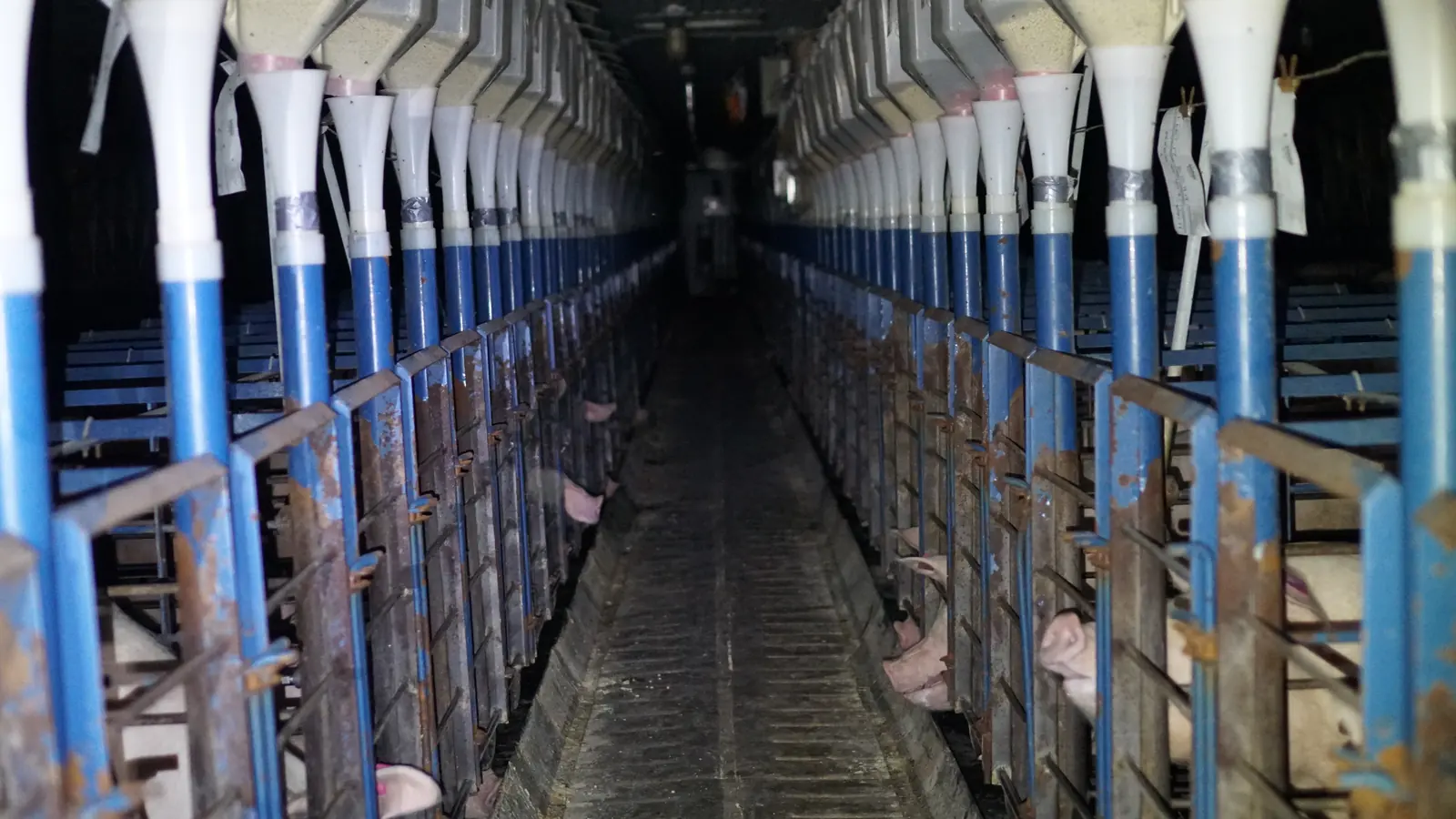
Modern animal agriculture has applied the principles of industrial, mass production to living beings. Principles like cost reduction, increased yield, and ever-shorter production times are baked into the system, and machines now dispense feed and water and regulate temperature automatically. A single person can “manage” thousands of animals. But there's one thing that can't be mechanized: care.
When profit depends on producing as much as possible at the lowest cost, care becomes a liability. Animals in factory farms are often given the bare minimum amount of space to cut costs, and they are selectively bred to grow faster and produce more, traits which harm their health in the interest of maximizing profit. In a system designed around efficiency and uniformity, individual suffering is just the cost of doing business. That's the defining feature of a factory farm: a place where animals are treated not as individuals, but as interchangeable components in a production line.
Inside a Factory Farm
A typical chicken facility contains tens of thousands of birds in one long, windowless building. Automated lines deliver feed and water from outdoor silos. Fans pump air through the space. As the birds grow, they fill nearly every inch of the floor until it becomes a single mass of moving bodies.
There's no realistic way to monitor each bird. The ones who become sick or injured are left where they collapse. Walking through, one might see the bodies of those who didn't survive mixed among the living. The closest thing to a caretaker they get is a worker whose job it is to walk through and remove the dead bodies every day. It's not that no one cares, it's that the system isn't designed to.
A look at the impacts on the chickens experiences shows that these conditions have very real impacts on them. The Welfare Footprint Institute conservatively estimates that chickens in factory farms experience some level of pain for 612 hours during their life; which comes out to about 36 days worth of time awake. Most broiler chickens will only live about 45 days, which means 80% of their life is expected to be spent in pain.
 Petaluma Poultry Llano | Sonoma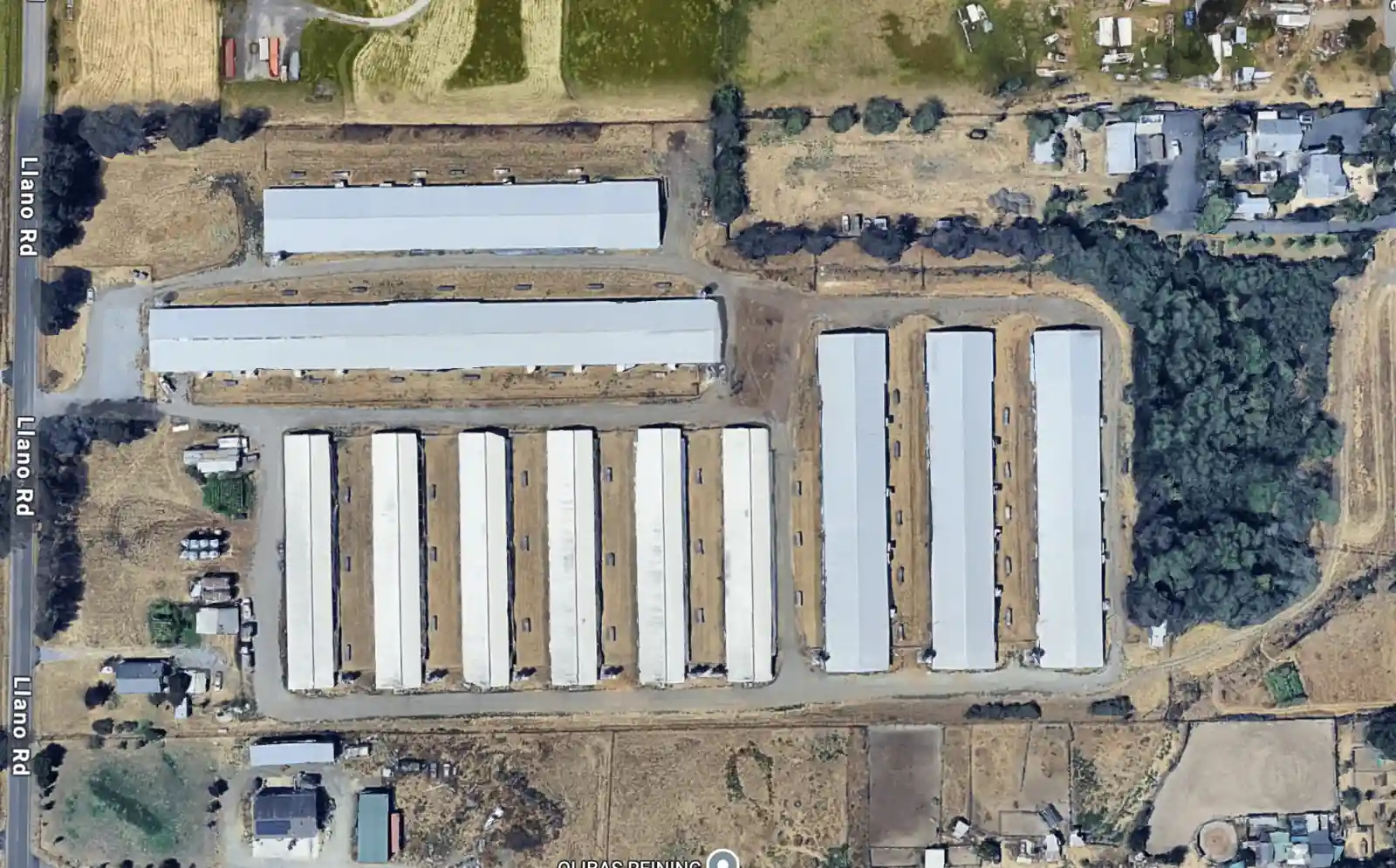
Why It Persists
Factory farming exists not because anyone set out to design cruelty, but because the economics of the system reward it. When the goal is to produce the greatest volume at the lowest price, the easiest corners to cut are the ones that involve care.
Many farmers dislike the system, too. They operate under contracts and market pressures that force them into scale and speed, often at the expense of their own wellbeing as well as the animals'. The problem is the structure that leaves little room for compassion rather than simply a few bad actors.
Changing the Incentives
If factory farming was built by incentives, it can be changed by them. Laws, transparency, and public awareness can begin to realign the system toward ethics and sustainability — to make it possible, and necessary, to treat animals as living beings again.
Factory Farm Watch provides transparency into factory farms in California so that voters and consumers can make informed decisions. We also call for regulation to make sure animal's needs are taken care of, and we hope you'll support us to call for accountable regulation from our legislators