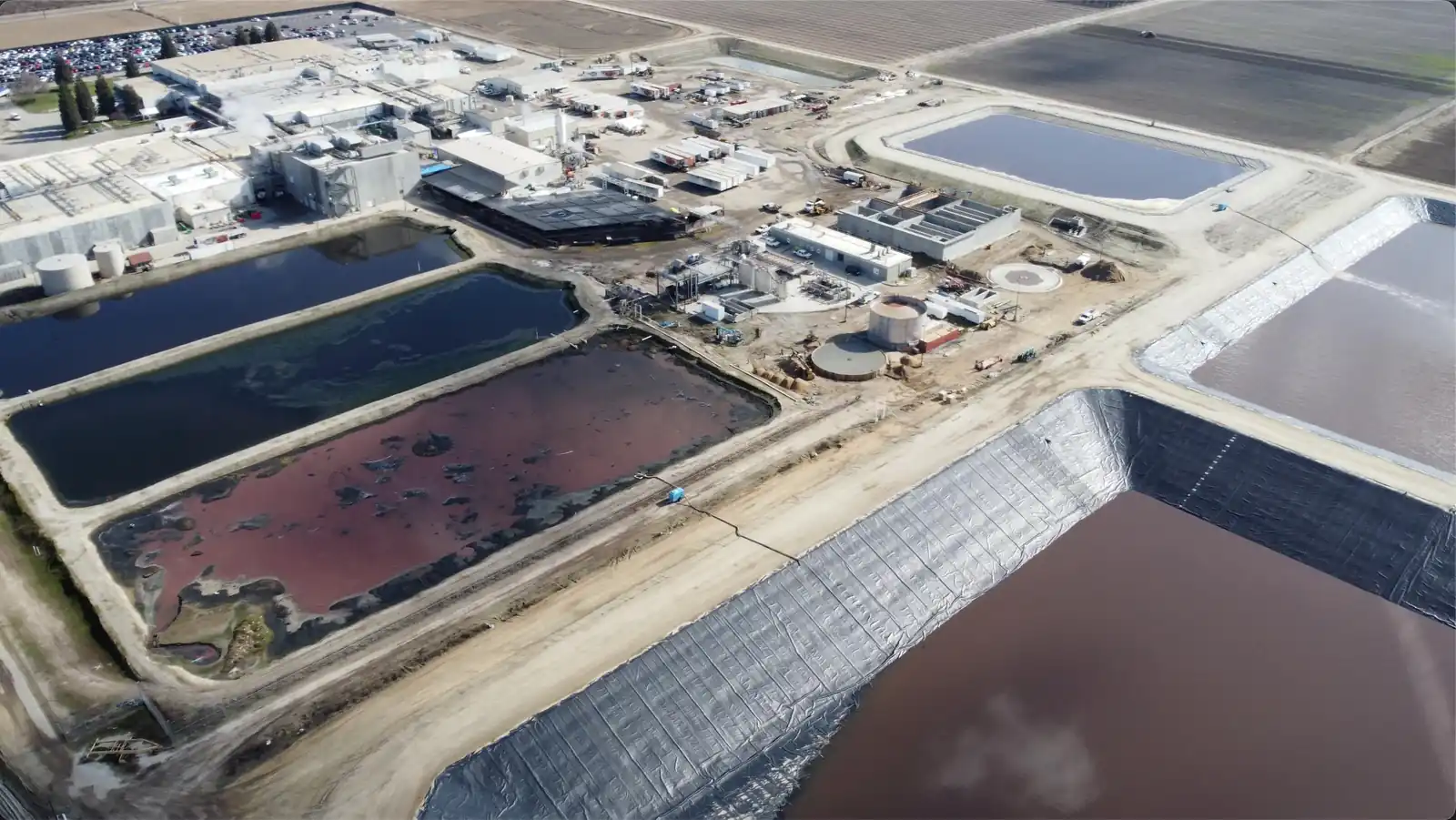
 Harris Ranch Slaughterhouse
California loves to call itself a climate leader. But how well does that reputation hold up when you zoom in?
Using more than 100,000 data points from government databases, field investigations, and manual research, the Factory Farm Watch maps over 1,300 intensive animal operations across the state - exposing an overlooked source of climate pollution: industrial livestock.
“Using the most comprehensive data gives us an opportunity to see more precisely what the amount and distribution of factory farming's impact is on California,” said Lewis Bernier, a researcher behind the map.
Despite ambitious targets - 40% fewer greenhouse gases by 2030 and net-zero by 2045 - the California Air Resources Board (CARB) admitted in 2024 that it doesn't regulate emissions from livestock facilities, the state's largest human source of methane.
FFW makes that failure visible, revealing methane and waste hotspots across the state. For example, California's largest cattle operations, such as Brandt Cattle Company in Calipatria and Grimmius Cattle Company's East Ranch in Strathmore, emit more than a million tons of CO2e annually.
The real methane machine, though, is the dairy industry, making up roughly 75% of California's factory farms - with the densest clusters in the Central Valley.
In other words, California cracked down on oil and gas, but left a cow-shaped hole in its climate plan.
The Methane Makers
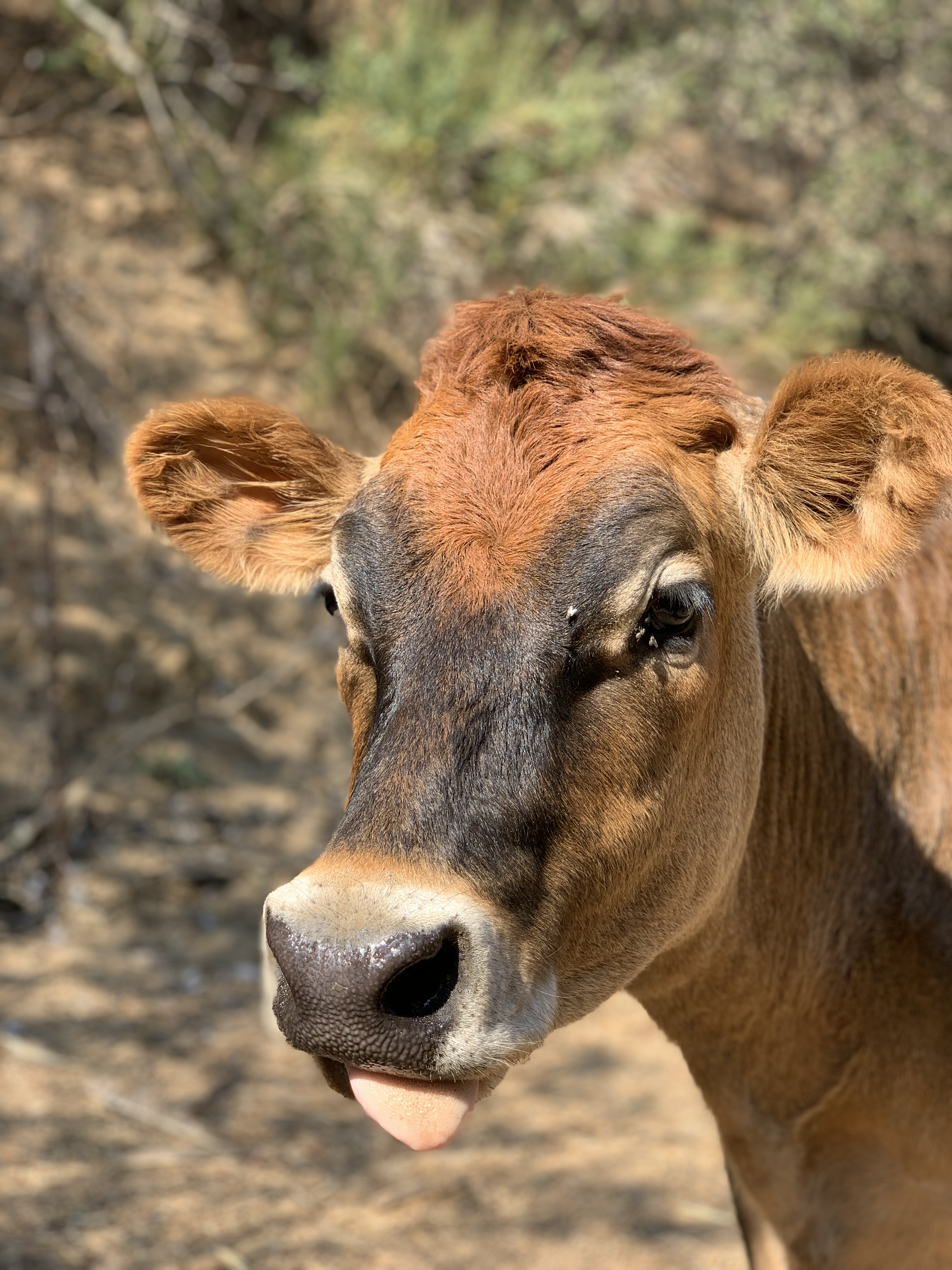
To understand the scope of the problem, it helps to start with the animals themselves - and how their biology and industry design amplify each other.
Cows are ruminants. Their unique stomach chamber - the rumen - ferments fibrous plants with microbes that also release methane as a byproduct. The more they eat (or the lower the feed quality), the more methane they belch.
Even how cows are raised changes the equation:
- Pasture-fed cows emit more through digestion (called “enteric fermentation”).
- Feedlot cows emit less enterically but generate massive manure methane from lagoons and piles that stew without oxygen.
It's a tradeoff that Factory Farm Watch helps visualize - pinpointing where these industrial feedlots cluster and how they overlap with vulnerable communities.
Breathing the Cost
The consequences of this system are written in the air Californians breathe.
In the Central Valley, California's agricultural heartland, the air tells its own story. Tulare County alone has nearly 300 dairy factory farms, according to FFW findings. These facilities churn out more than milk: they're also among the largest sources of ammonia, VOCs, dust, hydrogen sulfide, and methane in the region.
When ammonia from manure mixes with nitrogen oxides from cars and industry, it forms PM2.5 - the microscopic matter that dominates the Valley's smog. On bad days, it accounts for more than half of local particulate pollution. These fine particles seep deep into lungs, contributing to health issues such as lung disease, heart disease, and - according to a 2023 technical analysis submitted to the California Air Resources Board - about 1,700 premature deaths each year.
Add in hydrogen sulfide (the “rotten egg” gas from manure pits) and dust laced with bacteria and ammonia, and the Valley's air becomes a toxic soup trapped by mountains and temperature inversions.
Factory Farm Watch overlays this environmental crisis with geography - showing not just emissions, but who's forced to breathe them.
Heat Beneath the Herds
The pollution choking California's air doesn't just harm communities - some of it also fuels global warming.
Let's talk about methane again. This greenhouse (heat-trapping) gas is more potent than carbon dioxide but spends much less time in the atmosphere.
Think of methane like the heat from a running furnace - if you turn it down, it'll cool off quickly; carbon dioxide is like insulation - once it's in place, the heat stays.
That difference matters. Cutting methane delivers rapid benefits - cooler temperatures within decades and fewer climate tipping points. One recent Science study found that the global advantages of methane reduction are at least six times greater than the cost.
For California, already facing drought, fire, and extreme heat, reducing methane means cleaner air, greater resilience, and faster relief from warming.
California's methane targets hinge on tackling livestock emissions. Dairies and beef operations produce roughly half of its total output, making them central to meeting the 40% reduction goal by 2030.
Without directly curbing methane from feedlots and cow burps, California's climate plan can't meet its own benchmarks - or its promise of true climate leadership.
So, here's the test: Will the state control this powerful, short-lived gas or keep bending the knee to special interests? Each unregulated ton cancels gains from clean energy - and the state's success or failure will echo far beyond its borders.
Big Oil's New Cash Cow
Yet instead of confronting the livestock problem head-on, California has embraced a workaround.
The Golden State relies on a false solution - voluntary incentive programs that pay farms to install methane digesters, equipment that captures some gas from manure and converts it into so-called “renewable natural gas.”
“Biogas has become big business,” according to Food and Water Watch, "with the oil and gas industry investing billions of dollars in recent years and the Wall Street Journal calling it 'a gold rush in cow manure.' And the biggest driver is California's LCFS program.”
LCFS stands for one of California's flagship climate programs, the Low Carbon Fuel Standard. Food and Water Watch argues that Governor Newsom and CARB have allowed Big Ag and Big Oil to “hijack” the Golden State's climate progress - turning a program meant to cut emissions into one that props up polluting industries, including those out of state. The result: large factory farms expand, while smaller operations get squeezed out.
In the end, California's climate story remains split - stricter on fossil fuels, silent on livestock. And Factory Farm Watch makes the silence impossible to ignore.
Conclusion
California's climate leadership has long been a point of pride - and in many ways, rightfully so. But leadership means confronting every major source of pollution, not just the politically convenient ones.
Livestock methane isn't a side issue; it's the missing piece of the state's climate puzzle. Until California applies the same urgency to factory farms that it does to fossil fuels, its progress will remain partial - and its air, water, and communities will keep paying the price.
Factory Farm Watch doesn't just show where the emissions are. It shines a light on where real climate action must finally take hold.