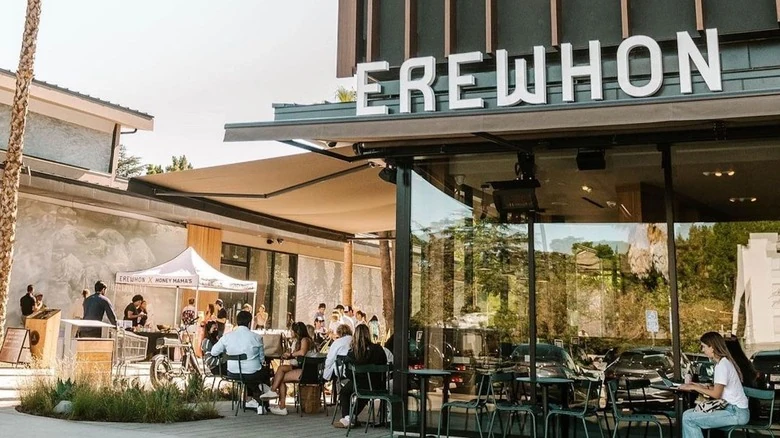
At Erewhon, the upscale Los Angeles grocery chain known for attracting celebrities, influencers, and affluent consumers, shoppers are presented with a carefully curated image of ethical consumption. Animal products are marketed as humane, sustainable, and aligned with the company's premium wellness branding.
According to The Economist, Erewhon “has emerged as the grocer of choice for celebrities from Hailey Bieber to the Kardashians.” Erewhon markets itself as a certified B Corporation, a designation intended to recognize businesses meeting certain social and environmental standards, and the company says it is committed to animal welfare and responsible sourcing practices.
Yet many animal product brands sold at Erewhon are linked to factory farms that have faced criticism over cruel conditions, raising serious questions about the gap between humane marketing claims and industrial farming realities.
Erewhon sells products from brands including Mary's Free Range Organic Chicken, Diestel Turkey, Organic Valley, Alexandre Family Farm, and Clover Sonoma, companies that rely on industrial-scale animal agriculture systems despite humane-oriented branding and marketing language.
Until June 2026, Erewhon also sold Meyenberg Goat Milk, sourced in part from Vera Goat Dairy in California's Central Valley. In 2021, Vera Goat Dairy was cited by the Central Valley Regional Water Quality Control Board for leaving piles of dead goats on the property, risking dangerous contamination of the groundwater.
In 2025, investigators with the animal advocacy group Direct Action Everywhere (DxE) documented the continued, regular dumping of dead mother and baby goats at Vera Goat Dairy. Necropsy findings from recovered animals identified parasitic infection, bacterial disease, emaciation, and severe muscle atrophy. Erewhon dropped Meyenberg Goat Milk from its shelves following months of public pressure, but they continue to carry other factory farm products.
The controversy at Erewhon reflects a broader debate over “humanewashing,” a term used by critics to describe marketing practices that portray animal products as ethical or humane while obscuring conditions within large-scale commercial farming operations. As consumer demand for higher-welfare and sustainably sourced products continues to grow, premium grocery retailers increasingly market animal products using terms such as “pasture-raised,” “free-range,” “organic,” and “humane.” For example, Meyenberg is Certified Humane but DxE investigators found the company was violating several Certified Humane standards of animal care, including the requirement that sick animals are separated from the other animals and treated without delay.
These claims often rely on limited auditing systems (with pre-announced visits), weak certification standards, and marketing language that can create misleading impressions about actual farm conditions.
Erewhon's customers trust that the company is vetting suppliers and rejecting “humanewashing.” Instead, Erewhon is complicit in selling false humane labels to people paying premium prices for so-called ethical products.