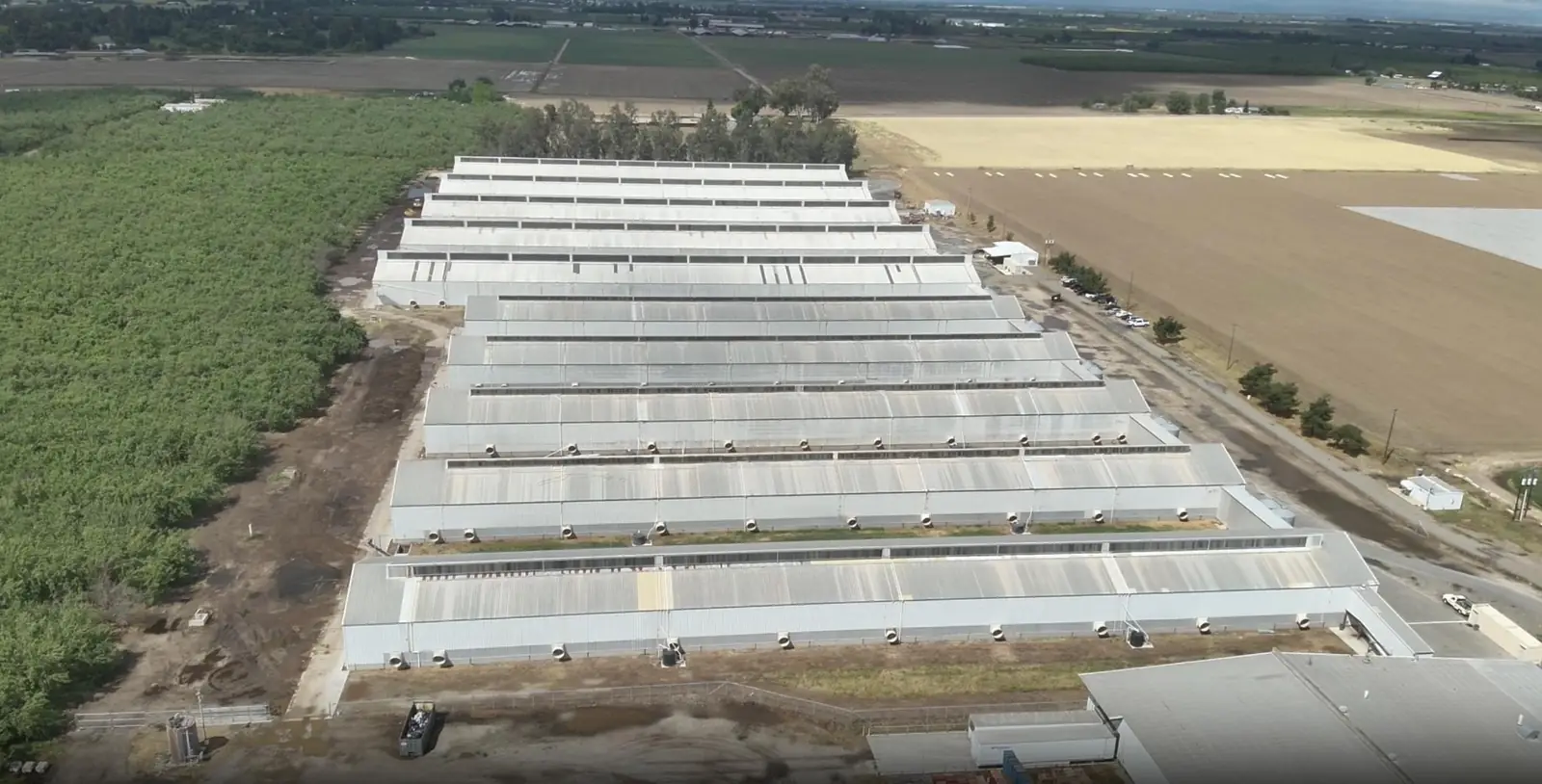
 August Ranch | Merced
Avian Flu in California
The H5N1 strain of highly pathogenic avian influenza (HPAI), also known as avian flu, was first detected in a California poultry flock in August 2022, where it quickly and widely spread across the state to other poultry operations, and has continued to impact poultry operations in subsequent years. When avian flu is detected in a poultry flock, the Animal and Plant Health Inspection Service (APHIS), an agency of the U.S. Department of Agriculture (USDA), requires that all birds in the operation are culled. This means that even when a few birds in one barn of a massive factory farm are infected, all chickens in the facility are killed. This has resulted in the government killing 23,716,000 birds since 2022, as reported by APHIS.
In August 2024, avian flu was detected in cows in California, and has since grown to be a widespread problem for dairy operators across the state. It is estimated that around 75% of California herds have been infected. The virus can be transmitted from cow to human which has resulted in dozens of farm workers being infected across the state.
Factory farming has exacerbated avian flu in California. Large numbers of animals packed into confined spaces create an environment where viruses can spread quickly from animal to animal and weaken the immune system of the animals confined. There is also evidence that high temperatures in the Central Valley, where a majority of dairies operate in the state, can worsen the effects of avian flu in dairy cattle, leading to increased fevers and stress, which weakens their immune systems and increases the risk of death.
The clear answer to eliminate the problem of avian flu, which remains rampant across states and species, is to eliminate factory farming. Yet rather than reform their practices, factory farm operators are bailed out with our taxpayer dollars.
How Taxpayers Pay
The USDA offers indemnity programs to poultry and dairy operators to compensate for profit losses as a result of bird deaths and milk production declines. These programs are funded through U.S. taxpayer dollars, meaning the government covers the cost even if it is the operator or industry practices that led to the spread of avian flu. Because producers, often large corporations, are bailed out without any requirements to change, these programs offer no incentive for the industry to change to reduce the risk of avian flu spread. Instead, these programs perpetuate the expansion of these industries and exacerbate the risk that avian flu will evolve to be more contagious and deadly across species.
Between August 2022 and August 2025, the USDA has spent over $140 million providing financial aid to California poultry operators affected by H5N1 outbreaks. These payouts are designed to offset the cost of culling all birds in a facility.
ELAP offers a similar indemnity program to dairy producers who incur milk losses due to infected herds. With over 750 dairies being infected in the state, ELAP has paid out over $370 million to impacted dairy operators.
Altogether, more than half a billion taxpayer dollars have been used to bail out large animal agriculture operations. And without meaningful systematic change, these industries will continue to rely on public money to clean up the consequences of their own practices. How long will taxpayers be expected to subsidize a system that refuses to protect them, or animals, from the next pandemic?
Who Is Getting Bailed Out
With the increased consolidation of poultry and dairy industries throughout the state it's important to look at which entities are receiving indemnity payments and assess whether the same corporations are being repeatedly bailed out.
Of the more than $140 million granted to nearly two dozen poultry operators, just three companies, Gemperle Brothers, Foster Farms, and Pitman Family Farms, account for over 50 percent of all payments. All three of these entities operate some of the most highly-concentrated facilities in the entire state, including factory farms confining millions of animals in just a single facility. Gemperle Brothers is the largest egg supplier in the state and received the largest share of funding at a striking $37,898,348. Gemperle sells under many different brands including Horizon Organic — a certified B-Corporation. B-Corporation certifies that a company meets high social and environmental performance standards. That label is a misleading label considering the amount of public health risk the facility poses to the public, and the number of birds who are tortured through horrific culling methods such as ventilation shutdown.
Together, these figures illuminate concern around taxpayer dollars absorbing the risk of having mega factory farms in the state, and raise questions about why public funds are being used to reinforce the same vulnerabilities year after year.